- Metro medicare, Mula Gabharu Path, Dispur, Kahilipara, Guwahati
- +91 9401500143

ORTHOPAEDICS & ARTHROSCOPY SURGEON
ORTHOPAEDICS & ARTHROSCOPY SURGEON
Knee Arthroscopy
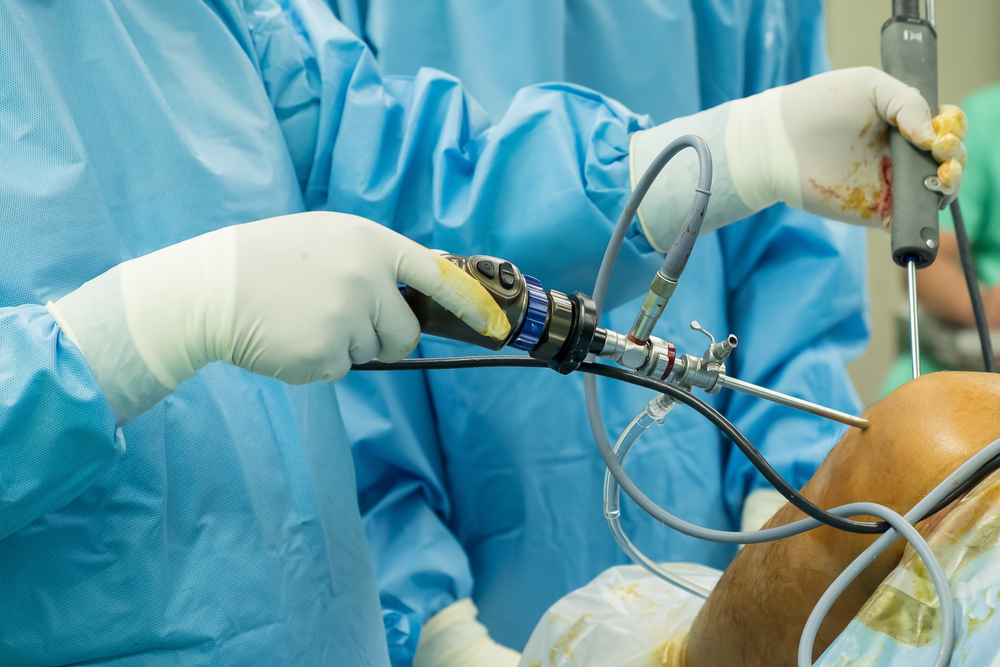
Knee Arthroscopy
Knee arthroscopy is a surgical procedure that is commonly used to diagnose and repair problems within the knee joint. It allows doctors to view the knee joint without making a large incision (cut) through the skin and other soft tissues. During knee arthroscopy, your surgeon will insert a small camera, called an arthroscope, into your knee joint. The camera displays pictures on a video monitor, and your surgeon uses these images to guide miniature surgical instruments.
Because the arthroscope and surgical instruments are thin, your surgeon can use very small incisions, rather than the larger incision needed for open surgery. This results in less pain and joint stiffness for patients, and often shortens the time it takes to recover and return to favorite activities.
Why the Procedure Is Performed
Your doctor may recommend knee arthroscopy if you have a painful condition that does not respond to nonsurgical treatment. Nonsurgical treatment includes rest, physical therapy, and medications or injections that can reduce inflammation.
Knee arthroscopy may relieve painful symptoms of many problems that damage the cartilage surfaces and other soft tissues surrounding the joint.
Common arthroscopic procedures for the knee include:
- Torn meniscus. Meniscus is cartilage that cushions the space between the bones inthe knee. Surgery is done to repair or remove it.
- Torn or damaged anterior cruciate ligament (ACL) or posterior cruciateligament (PCL).
- Swollen (inflamed) or damaged lining of the joint. This lining is called the synovium.
- Kneecap (patella) that is out of position (misalignment).
- Small pieces of broken cartilage in the knee joint.
- Removal of a Baker cyst. This is a swelling behind the knee that is filled with fluid. Sometimes the problem occurs when there is swelling and pain (inflammation) from other causes, like arthritis.
- Repair of defect in cartilage.
- Some fractures of the bones of the knee.
Outcome
Many people return to full, unrestricted activities after arthroscopy. Your recovery will depend on the type of damage that was present in your knee.
Unless you have had a ligament reconstruction, meniscus repair, or cartilage restoration, you should be able to return to most physical activities after 6 to 8 weeks, or sometimes much sooner. You may, however, need to avoid higher impact activities for a longer time.
If your job involves heavy work, it may be longer before you can return to your job. Discuss with your doctor when you can safely return to work.
For some people, lifestyle changes are necessary to protect the joint. An example might be changing from high impact exercise (such as running) to lower impact activities (such as swimming or cycling). These are decisions you will make with the guidance of your surgeon.
Sometimes, the damage to your knee can be significant enough that it cannot be completely reversed with arthroscopic surgery. More extensive operations may be needed in the future for these more severe conditions.
What are the advantages of knee arthroscopy?
Minimally invasive procedures like knee arthroscopy usually require less recovery time than traditional (open) surgery. As you only need a few small stitches, you’re more likely to get back on your feet more quickly than with traditional surgery. You may also have less pain and a lower risk of infection.
Arthroscopic ACL Surgery
Arthroscopic ACL surgery is done to repair a partially or completely torn ACL (anterior cruciate ligament). Most cases of ACL knee surgery are carried out arthroscopically these days. An arthroscopy is a minimal invasive surgical procedure where a special camera and surgical tools are inserted into the knee through small holes.
Arthroscopic ACL surgery is commonly referred to as “keyhole surgery”. The bigadvantage is that the surgeon can assess the joint and repair any injuries without needing to fully open the joint. This speeds up recovery due to less trauma to the knee.
Do I Need Surgery?
Many people recover from ACL injuries without the need for arthroscopic ACL surgery, even some people who have completely ruptured their ligament. It essentially comes down to two things, how severely the stability of the knee has been affected and what activities the affected individual is wanting to return to.
- Instability:
Arthroscopic ACL surgery is recommended if the knee keeps giving way/buckling due to chronic instability. Any time this happens, there is a risk of damage to the other structures in the knee, particularly the cartilage and meniscus. It is important to avoid repeated giving way of the knee as if the meniscus tears, there is less protection for the knee bones and increased risk of developingarthritis.
- The Individual:
The need for torn ACL surgery will also depend on the activity levels of the affected individual. Someone who is wanting return to sporting activities is more likely to need surgery than someone with a fairly sedentary lifestyle.
Arthroscopic ACL surgery is therefore indicated in individuals who:
- Want to return to pivoting type sports e.g. football, skiing, tennis, rugby, boxing or hockey
- Have problems with instability with their knee giving way during their everyday activities
An ACL injury often occurs in sports, but it can also occur if you twist your knee suddenly or receive a direct hit to the knee. Injury to your ACL is often accompanied by a “popping” noise and the feeling that your knee could give out from under you.
Other signs and symptoms of an ACL injury include:
- Discomfort while walking
- Knee swelling within the first few hours of the injury
- Limited knee movement because of swelling and/or pain
- Loss of full range of motion
- Pain on the outside and back of the knee
While swelling and pain may go away on its own, if you have an ACL injury and you return to sports, your knee may be unstable and you risk causing further damage to the cushioning cartilage (meniscus) of your knee.
Diagnosing an ACL Injury
In order to diagnose an ACL injury, our orthopaedic and sports medicine experts will perform a physical exam to check for swelling, tenderness, stability and other signs of injury. You may also undergo digital imaging to allow the surgeons to take a closer look at the injury. The main types of digital imaging tools include:
- CT scan (CAT scan): This special study takes detailed 3D images of a bone. CT images take far more detailed images of bones than a standard X-ray.
- Magnetic resonance imaging (MRI): An MRI is a common test used to see athletic injuries. Orthopaedists are able to see soft tissue such as tendons and ligaments as well as bone abnormalities.
- Ultrasound: This is a safe and painless test using sound waves to produce pictures of the muscles, tendons, ligaments and other soft tissues of a joint.
- X-ray: An X-ray provides detailed imaging of bones and hard structures and can be helpful in viewing whether your injury is associated with a broken bone.
How does ACL reconstruction surgery work?
In ACL reconstruction surgery, a new ACL is made from a graft of replacement tissue from one of two sources:
- a portion of the patient's own hamstring, quadriceps or patellar tendon
- an allograft (tissue from a human organ donor)
The type of graft used for each patient is determined on a case-by-case basis.
ACL reconstruction surgery is performed using minimally invasive arthroscopic techniques, in which a combination of fiber optics, small incisions and small instruments are used. A somewhat larger incision is needed, however, to obtain the tissue graft. ACL reconstruction is an outpatient (ambulatory) procedure, in which patients can go home on the same day as their surgery.
What is the recovery time for ACL surgery?
It usually takes six to nine months for a patient to return to participating in sports after an ACL reconstruction, depending on the level of competition and the type of activity.
Patients are able to walk with crutches and a leg brace on the day of surgery. Very soon after surgery, the patient enters a rehabilitation program to restore strength, stability and range of motion to the knee. The rehabilitation process is composed of a progression of exercises:
- Strengthening and range-of-motion exercises are started early in the recovery period.
- Running exercises begin at about four months.
- Pivoting exercises are started at around five months.
- Return to playing competitive sports can begin as early as six months.
The degree of pain associated with ACL recovery varies and can be addressed successfully with medication. Recovery time also varies from patient to patient. The determination of when a patient has fully recovered is based on the restoration of muscle strength, range of motion and proprioception of the knee joint.
Arthroscopic surgical techniques have made recovery times quicker and easier in comparison to open surgery, which is how ACL reconstruction performed in the past. But to achieve a successful outcome, it is critical that the patient have a rehabilitation period that is carefully supervised by an appropriate physical therapist, as well as to have follow-up appointments with the surgeon.
CALL US
+91 9401500143
MESSAGE US
mahibulislam1@rediffmail.com
About Us
Dr. Mahibul Islam is a highly skilled and experienced orthopedic surgeon who has earned a reputation for providing exceptional care to patients in North East India and neighboring countries. He specializes in shoulder and knee arthroscopy and sports medicine, and has performed over 1000 arthroscopic surgeries throughout his career.